
> Ventimiglia Castle
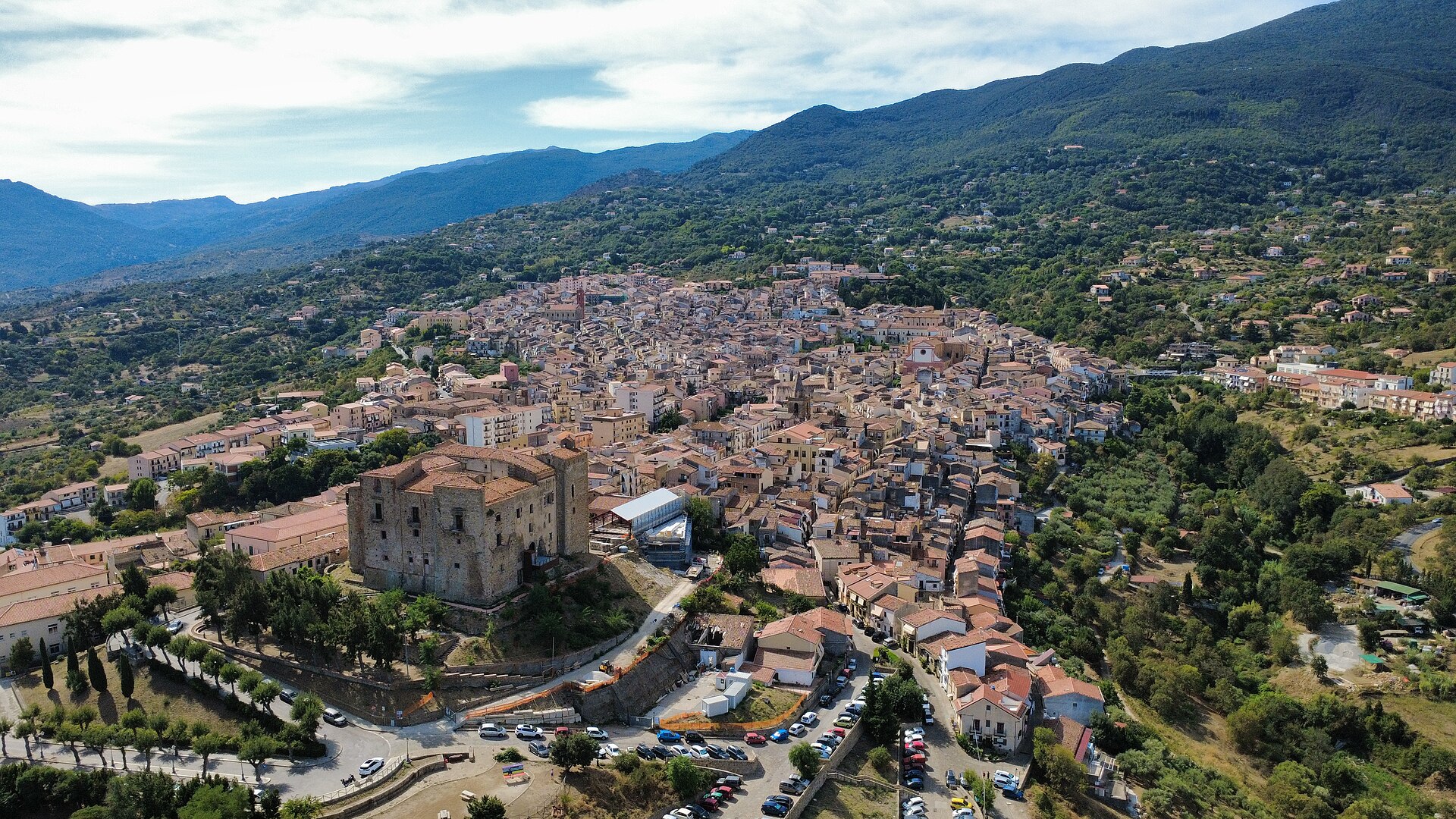
Founded in 1317 at the behest of Count Francesco I Ventimiglia, Castelbuono Castle is much more than a medieval monument: it is the very origin of the town, the place around which a community, a history and an identity have grown.
Seven centuries of history told through a castle
The castle’s architecture is a layered narrative of eras and influences. The cubic shape recalls Arab architecture, the four square corner towers and the battlements reflect the Norman style, whilst the cylindrical tower embodies Swabian military architecture. A building that embodies within its very structure the complexity of medieval Sicily.
The earthquake of the early 19th century destroyed the swallow-tailed battlements, the surrounding walls and part of the towers. Some 13th-century defensive structures and certain 14th-century rooms, however, remained intact.
From fortress to palatial residence
Originally built as a defensive structure, the castle gradually transformed into the seat of a cultured and refined court. In the 15th century, the marquis’s court welcomed artists from diverse cultures and of considerable prestige, including Francesco Laurana, who worked on the family mausoleum.

In 1595, Giovanni III was granted the title of Prince of Castelbuono, and in 1632 the town became the capital of the Principality. Amidst this atmosphere of great cultural ferment, the Ventimiglia family endowed the town with a theatre, and several literary academies flourished, with Torquato Tasso among the court artists.
The castle’s halls
Inside, the opulent halls feature carved and decorated coffered ceilings, as well as Gothic-style windows and doorways. Among the most exquisite rooms are the Sala del Principe with its 15th-century wooden ceiling in the Sala Magna—decorated and resting on carved corbels—and several halls that still retain traces of the original fresco decorations.
A castle and a community museum
In 1920, the castle, owned by Baron Fraccia, passed to the Municipality of Castelbuono thanks to a public fundraising campaign that enabled its purchase at auction. A collective gesture, one of the earliest examples of public property in Italy, which speaks volumes about the relationship between this place and its community. Since then, the castle has been the heritage of all the citizens of Castelbuono, home to the Civic Museum and the cultural heart of this village in the Madonie mountains.