
> Serpotta Chapel
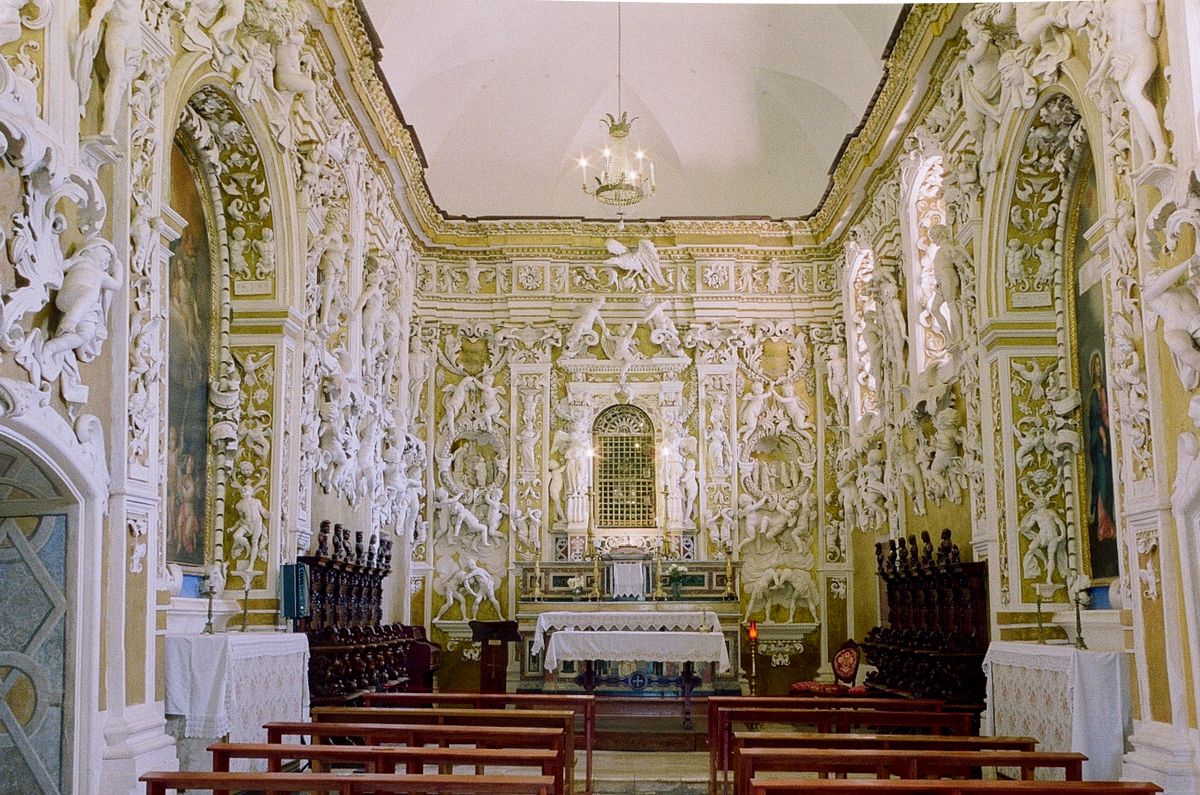
In the heart of the Ventimiglia Castle, home to the Castelbuono Civic Museum, on the main floor, lies one of the most extraordinary spaces in Baroque Sicily: the Palatine Chapel dedicated to Saint Anne, a masterpiece of stucco, gold and devotion that astonishes everyone who enters.
A chapel for a new era
In 1684, Francesco Rodrigo Ventimiglia commissioned the construction of a new palatine chapel. The previous one — older, square in plan, situated in the north wing of the palace — was now too small for a growing court and too austere for the Baroque taste that dominated the era.
To decorate the new sacred space, Giuseppe Serpotta from Palermo, the undisputed master of the art of stucco, was summoned to Castelbuono, where he worked alongside his younger brother Giacomo.
A riot of stucco and gold
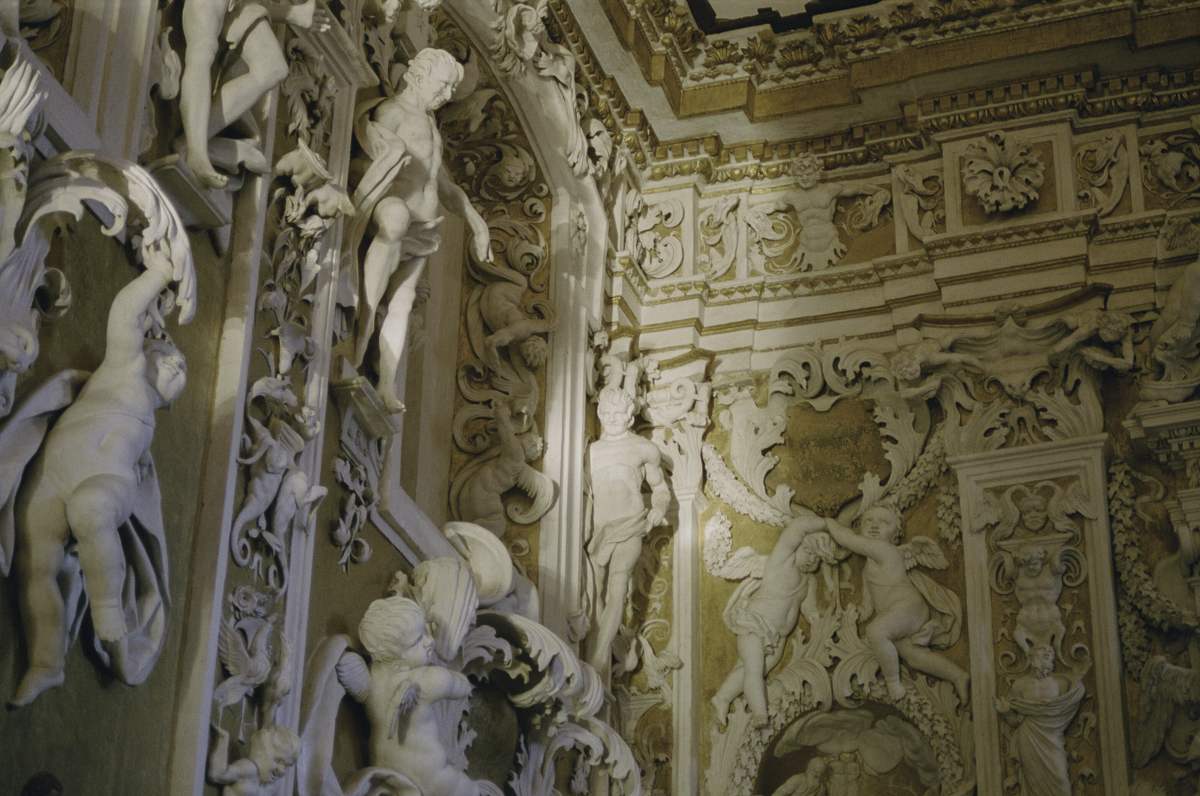
The effect one experiences upon entering the chapel is one of pure wonder. The smooth white stuccoes stand out against a background of pure gold, creating a contrast of rare visual power: playful cherubs, fluttering drapery, and plant- and animal-like creatures populate every surface in a bizarre yet refined imaginary repertoire.
The decorations reveal a close kinship with another work by the two brothers, created shortly before: the altar of the Church of Carmine Maggiore in Palermo. One recognises the same vitality and the same imagination, albeit with a redundancy that is still somewhat immature compared to the fluidity of Giacomo’s later works — a quality that is nevertheless already glimpsed in the two miniature theatres within medallions on either side of the altar, characterised by a confident spatial composition and an elaborate study of perspective.
The chapel was restored in 1999 by the Opificio delle Pietre Dure in Florence, involving cleaning, consolidation and aesthetic restoration of the gilded background.
The view towards the altar
The oblong plan covered by a vault creates a precise, dramatic perspective: after lingering on the decorations, the gaze is naturally drawn towards the back wall, where, within a niche on the high altar, rests the devotional heart of the entire chapel.
The Relic of Saint Anne
At the centre of the altar, housed in a silver reliquary in the shape of a bust, lies the Sacred Relic of the Skull of Saint Anne — the patron saint of Castelbuono. The reliquary, adorned with reliefs depicting scenes from the life of the saint, Saint Joachim and the birth of Mary, was commissioned in 1521 by Isabella Moncada and has been the focal point of devotion in Castelbuono for centuries.
The link between Castelbuono and Saint Anne dates back to 1454, when the Ventimiglia court brought the relic with them upon moving from Geraci Siculo. Subsequently, the saint became the town’s patron saint, and the castle the guardian of her cult.

A chapel through the ages
The chapel we admire today also bears the marks of a nineteenth-century transformation. In the 1820s, to accommodate an ever-growing congregation, the space was enlarged by demolishing the rear wall that separated the chapel from the so-called Marquise’s room, and the wooden choir loft was moved back by about three metres. A transformation that has made this gem accessible to generations of visitors to this day.
Sensory Experience in the Palatine Chapel
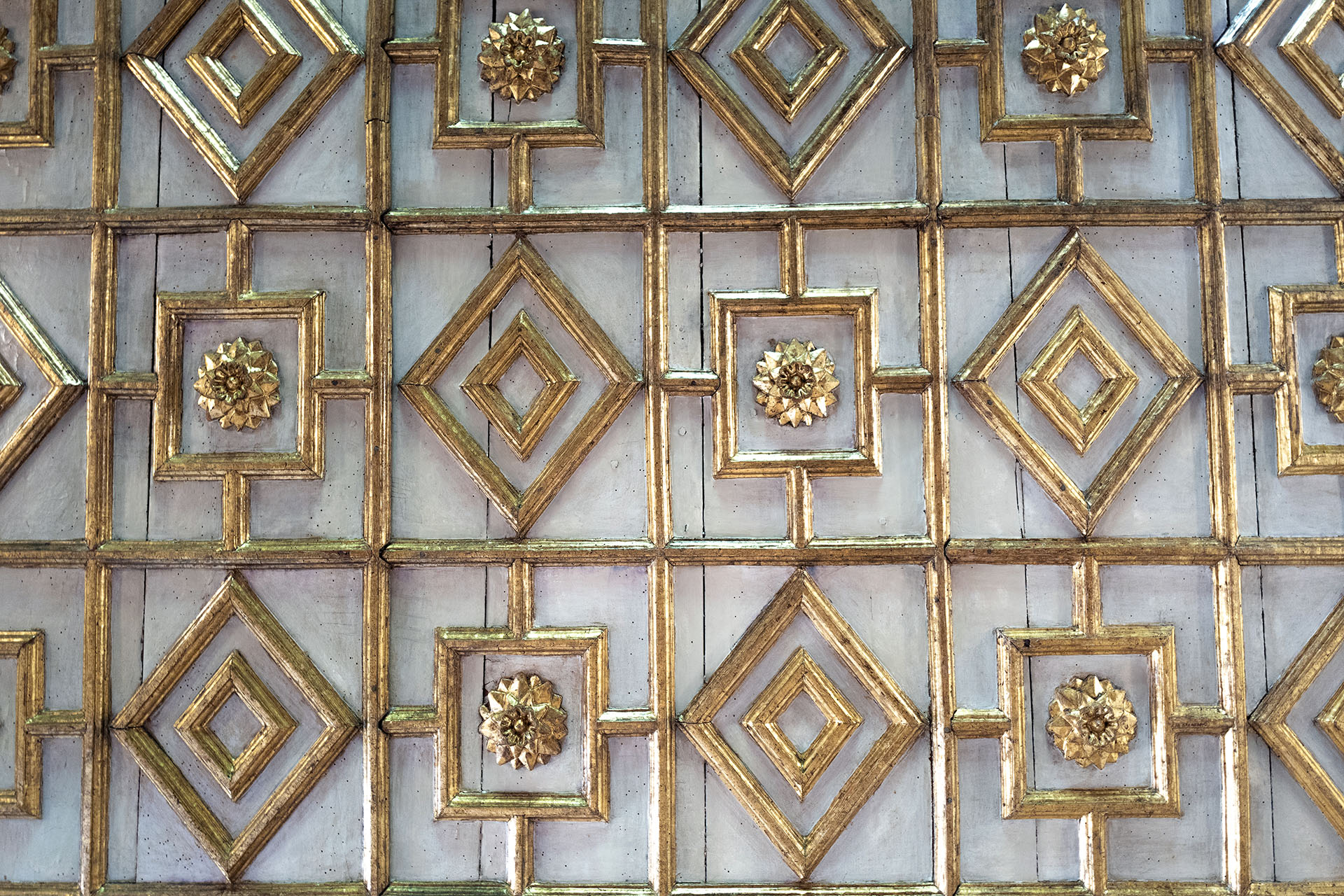
A sound installation transforms the Palatine Chapel into an immersive environment where sound, voice, and architectural space intertwine in a single sensory experience. The work guides visitors along a slow, contemplative journey, enhancing the chapel’s symbolic and visual richness. Read more...